Why Do Pipelines Degrade Without Stage-Exit Controls?
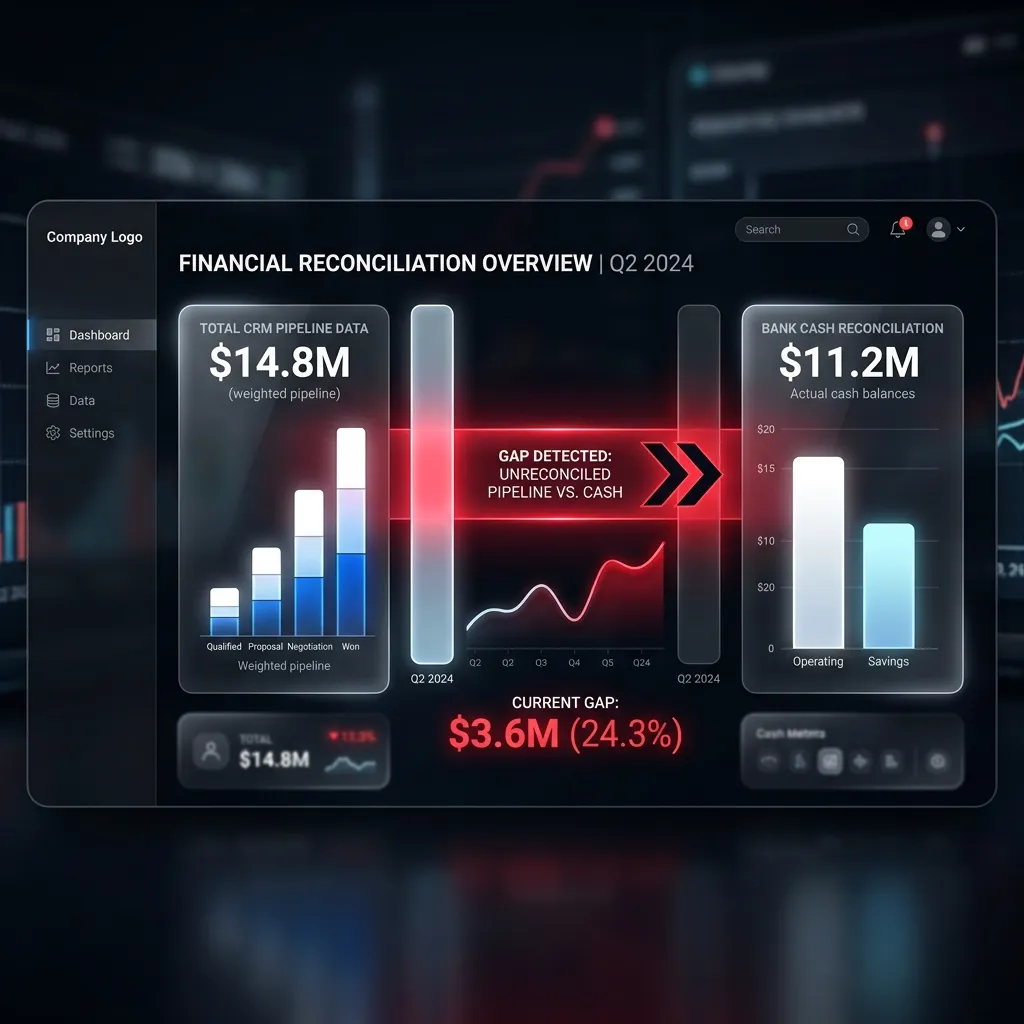
At $3M ARR, a pipeline review is a conversation. At $10M ARR, it is a data problem. Deal volume exceeds what any manager can verify individually, and the CRM starts drifting from reality faster than any single rep review can correct. The result is not one bad forecast. It is a persistent gap between what the system shows and what Finance collects at quarter end.
That gap has a mechanical cause: stage movement governed by sentiment rather than evidence. When a rep can advance a deal because they "feel momentum," the pipeline reflects their optimism, not the buyer's actual behavior. Research confirms this is a structural problem across B2B SaaS teams. 38% of RevOps leaders cite data quality and accuracy as their top operational challenge (Forrester, 2024), and the underlying driver is almost always the same: there is no system enforcing what "Stage 4" actually means.
Stage-exit controls are the architectural answer. They convert stage criteria from a description a rep reads into a requirement the CRM enforces before a deal can move. The result is a pipeline that reflects what buyers have actually committed to, not what reps believe is about to happen.
Binary Validation
A deal is only in Stage 3 if the artifact proving Stage 3 completion exists. It is binary. True or False. If False, the deal cannot progress. Managing pipeline on "vibes" is the fastest way to miss your Q4 targets. We replace sentiment with proof.
What Counts as a Valid Proof Artifact?
What constitutes proof? It is not a note saying "Client likes the demo." It is a signed business case, a completed security questionnaire, or a confirmed follow-up on the client's calendar. By building these requirements directly into the CRM's validation rules, you force the behavior you want to see. This isn't bureaucracy; it's engineering.
Advisory Criteria vs. Binary Validation: What Actually Changes?
Most pipeline stage definitions are advisory. They describe what should be true for a deal to be in a given stage. Binary validation changes the operating model: the CRM refuses to advance the deal until the required field or artifact exists. The difference is not philosophical. It shows up in the data within two review cycles.
| Dimension | Advisory Stage Criteria | Binary Stage-Exit Control |
|---|---|---|
| Enforcement | Rep self-certifies; manager reviews occasionally | CRM field or workflow blocks stage advance until artifact exists |
| Evidence standard | "Client showed interest" is sufficient | Named buyer contact confirmed on calendar, or signed document in record |
| Pipeline inflation | Phantom deals persist in active stages until late-quarter | Stalled deals surface within one review cycle, not at quarter end |
| Forecast trust | Managers apply personal discount to rep numbers | Stage-gated pipeline is testable without subjective adjustment |
In practice, a before/after comparison shows how this shifts the data model. Before controls, Stage 3 might hold twelve deals totaling $800K, of which three have confirmed next steps and nine have stalled for more than three weeks. After controls, those nine deals either clear the artifact requirement or fall back to Stage 2, leaving Stage 3 with three active deals and a smaller but accurate number. The forecast becomes smaller, more defensible, and closer to what Finance will actually collect.
What Happens to Pipeline in the First 30 Days?
The most common concern when installing stage-exit controls is pipeline contraction. When the CRM blocks advancement until an artifact exists, stalled deals surface immediately. A pipeline that showed $1.2M in active Stage 3 through 5 deals can compress to $700K within the first review cycle as deals fall back to their accurate stage. In this illustrative first-review-cycle example, that represents roughly 42% compression.
That contraction is the point, not a problem. The $500K difference was not real pipeline. It was sentiment captured as data. The forecast being built on $1.2M was already wrong. The controls did not create a smaller pipeline. They revealed it.
The first board pack after controls go live will show a smaller weighted pipeline figure. Leadership needs to communicate that shift in advance: the number is smaller because the measurement is more accurate, not because the business contracted. A smaller, defensible number is more useful for resource planning than a larger optimistic one that will be revised at quarter end.
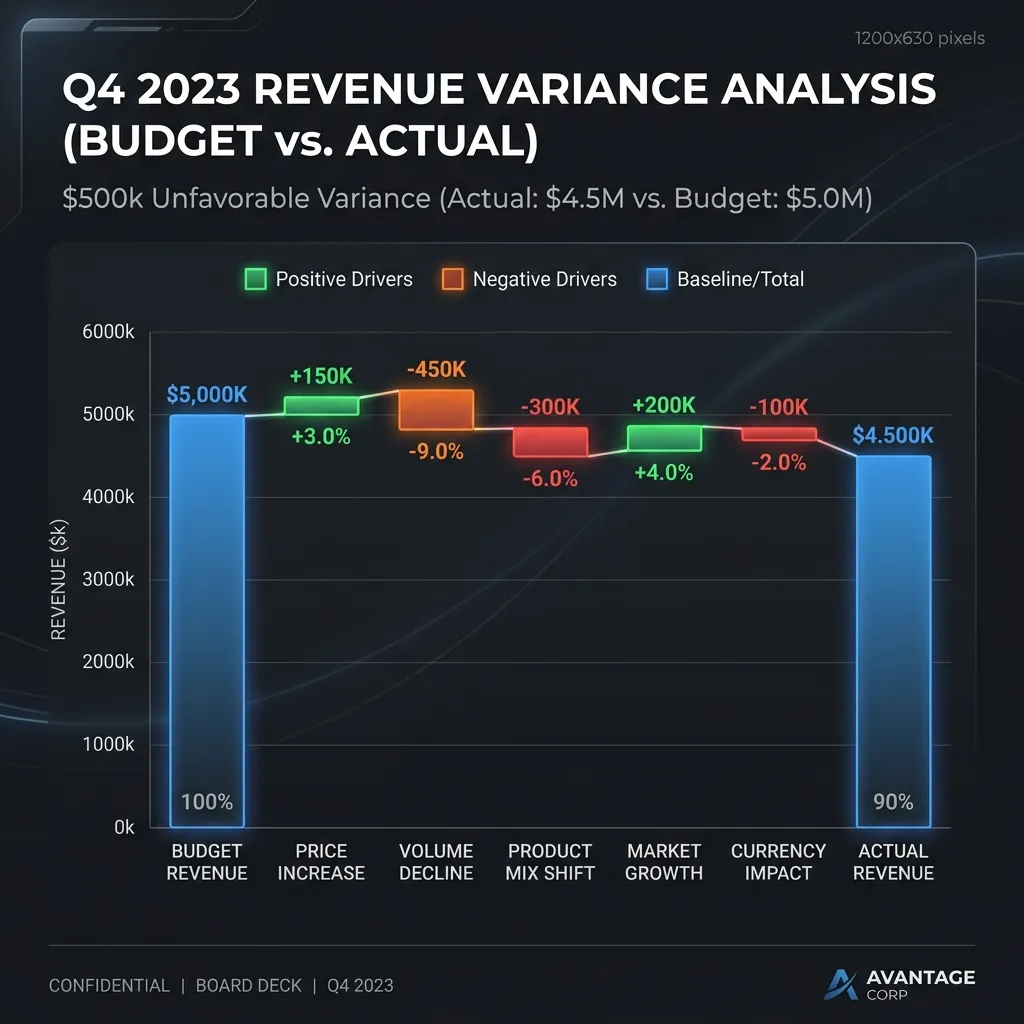
To brief the board on the trade, it helps to translate the pipeline compression into an annualized revenue-at-risk number before the review, so the smaller figure lands as a control outcome rather than a shortfall.
How Does Scale Break Stage Discipline?
As organizations scale beyond $10M ARR, the volume of deals makes manual oversight impossible. The latency inherent in unstructured growth quickly compounds. Executive leadership often misdiagnoses this as a personnel issue, but it is purely structural. We build the architecture that allows your team to scale without the wheels falling off the data model.
As the volume grows, the issue is less about rep effort and more about whether stage movement is still governed by observable evidence. Every manual handoff increases the chance that the CRM reflects sentiment faster than it reflects verified progress. That is how a pipeline starts looking larger than the business can actually convert. Forecast accuracy quietly degrades without a visible single-point failure.
What Are the Three Breakpoints Stage Controls Must Address?
Diagnostic analysis typically reveals three primary breakpoints: Commit Latency, Provisioning Drift, and Discount Bleed. Each of these represents a failure in the handoff between stages or departments. Stage-Exit controls are the "airlocks" that ensure no contamination (bad data) moves from one stage to the next.
Each breakpoint needs a control, but not always a heavyweight platform change. Commit latency may require a mandatory proof artifact before the deal can advance. Provisioning drift may require a clearer handoff and review date. Discount bleed may require approval thresholds and an exception log. The principle is the same in each case: do not let the stage move unless the evidence moves with it.
How Does Stage Discipline Change the Pipeline Review?
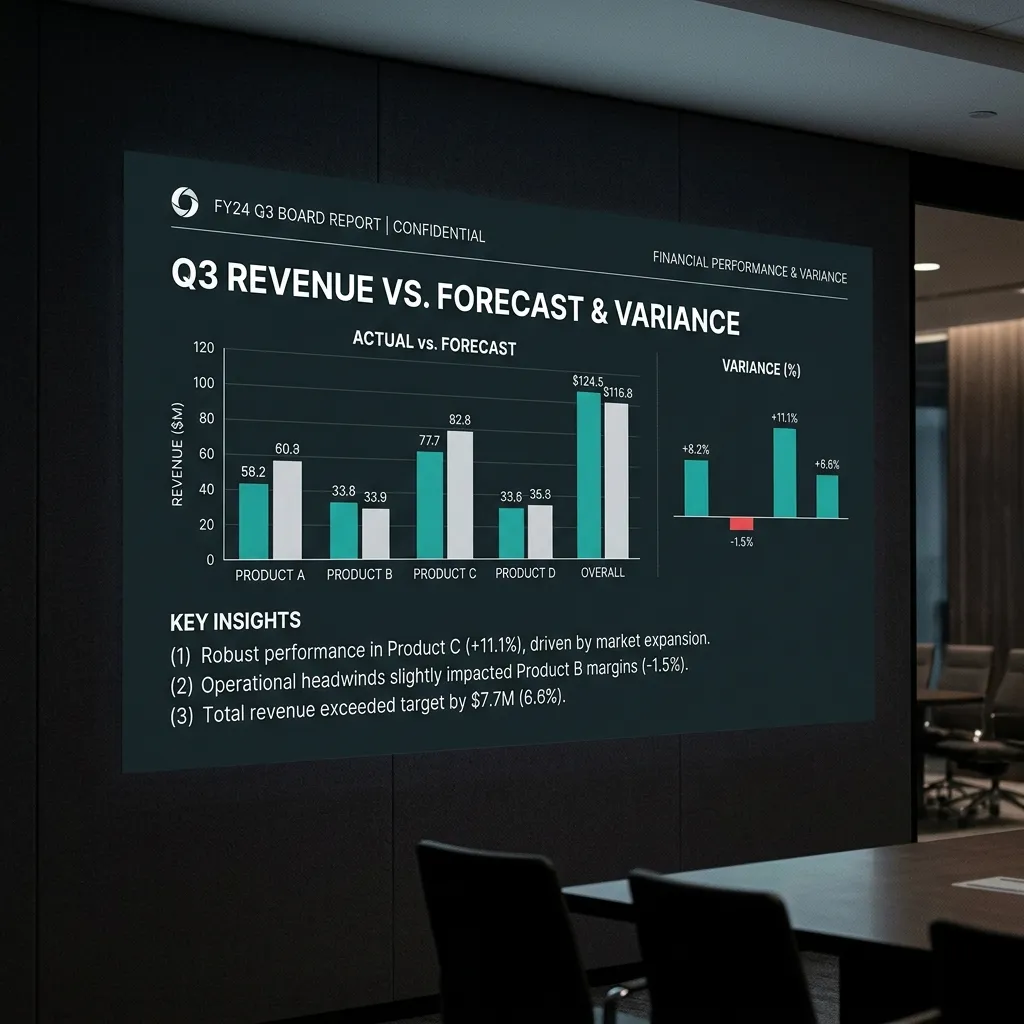
Most managers spend their time chasing reps for updates. With automated stage-exit controls, the manager is freed to actually coach. The data is either there or it isn't. The "Pipeline Review" becomes a "Strategy Review" because the data integrity is already guaranteed by the system architecture. That review discipline is also what separates a team that can explain forecast variance to the board from one that is still reconstructing what happened after the quarter closes.
The compounding effect of governance at the data layer is measurable. Improving CRM data hygiene can increase forecast accuracy by up to 30% (Gartner), and stage-exit controls are the mechanism that makes hygiene sustainable across reporting cycles, not a periodic cleanup project.
What Changes After Controls Are Installed
Once stage-exit controls are active, the pipeline review changes shape. Managers spend less time chasing status updates and more time examining the deals that still have real judgment in them. The question becomes less "what stage is this in?" and more "what evidence is still missing, and who owns it?" Stage discipline also directly affects pipeline velocity: fewer unqualified deals means win rate and cycle length move in the right direction simultaneously.
That is where MxM Revenue Engineering's sequence matters. The Scorecard identifies whether the problem is stage discipline, billing timing, reconciliation logic, or reporting definition drift. Controls Install moves those checks into the operating cadence and the CRM workflow. Governance keeps the rules stable long enough for the company to trust what it is seeing. The point is not false precision. It is a pipeline that can be questioned without collapsing into opinion. The Series B variance case study shows what this sequence produces in a company that was carrying significant phantom pipeline before controls were installed.
Free Tool
Model your pipeline velocity in real time
Adjust all four levers and see the quarterly and annual revenue impact of each improvement scenario, with benchmark bands for Series A, B, and C.
Open the Velocity Calculator →What Are Stage Exit Criteria in B2B Sales?
Stage exit criteria are the conditions a deal must meet before moving to the next pipeline stage. The term hides a split that matters operationally: criteria can be advisory or binary.
Advisory criteria describe what should be true. The rep reads them, decides the deal qualifies, and moves it. Binary criteria require proof. The CRM will not advance the deal until a specific field is populated, a document is attached, or a workflow condition is met.
Three pairs show the difference:
| Criteria Type | Advisory Version | Binary Version |
|---|---|---|
| Decision-maker confirmed | "Economic buyer identified" noted in deal description | Named economic buyer field populated with confirmed contact |
| Next step agreed | "Rep plans follow-up" | Calendar invite accepted by buyer, logged as activity |
| Business case aligned | "Client understands value" | Signed mutual action plan uploaded to record |
The advisory version leaves the judgment call to the rep. The binary version removes it.
How Do You Implement Stage-Exit Controls in Salesforce?
Salesforce has four enforcement mechanisms. Each operates at a different layer.
Validation rules fire when a record is saved. If the required field is blank when a rep tries to advance a deal, the save fails and the rule returns an error. Validation rules apply to user-initiated saves and to most API-initiated saves, so most integration writes are subject to them. Certain Salesforce-system processes may not trigger them; Salesforce documents the specific exemptions in its validation rule reference. Quick Create and some inline-edit paths on list views may also behave differently from a full record save. Verify against your edition before relying on them for enforcement.
Required fields set at the field level block saves in the standard UI when a value is missing. This applies to user-initiated saves; it does not apply to API writes or to records created via automation that bypasses the page layout.
Record-Triggered Flows and Screen Flows can run conditional logic as part of the stage-advance path. Flows handle more complex conditions than a single field check: requiring that a contact role field and a next-step date are both populated before Stage 4 is reachable, for example. The specific flow types available vary by edition; see the Salesforce Flow documentation for your edition.
Field-level security on the Stage picklist restricts which profiles or permission sets can write to that field. Combined with validation rules, a rep cannot set Stage to Closed-Won without both the artifact and the profile permission. Field-level security is available in Professional edition and above. See Salesforce field-level security documentation.
What Stage-Exit Controls Look Like in HubSpot vs. Salesforce
| Capability | HubSpot | Salesforce |
|---|---|---|
| Stage movement restrictions | Pipeline rules require specific deal properties before a rep can move a deal via the HubSpot UI. Available in Professional and Enterprise. API requests that supply a valid user ID may bypass pipeline rules; verify against the HubSpot pipeline rules documentation. | Validation rules fire on user-initiated and most API-initiated record saves. Certain Salesforce-system processes may not trigger them; see the validation rule reference for documented exemptions. |
| Deal approvals | Enterprise only. Approvals can gate stage movement or deal creation. See HubSpot deal approvals documentation. | Approval processes available in Professional edition and above. |
| Field-level restrictions | Property-level edit restrictions limit which users can write to deal properties. Availability varies by tier. | Field-level security restricts which profiles can write to a field. Available in Professional and above. |
| Inline-edit behavior | Pipeline rule enforcement applies to stage changes through the pipeline board view. Inline edit on list views may not enforce rules; verify in your portal. | Inline edit on list views may not trigger the same validation rules as a full record save. Test against your edition. |
HubSpot pipeline rules handle most stage-artifact requirements at Professional tier. Multi-field conditions or post-stage governance require the automation layer (HubSpot Workflows, Salesforce Flow) or admin-configured validation logic. Both platforms have documented bypass paths. Test against your specific configuration and integration stack before relying on either for enforcement.
Companies preparing for PE diligence should also verify that stage-exit logs are visible to external reviewers: see what operating partners look for in the PE pipeline due diligence guide.
The Red List
This article maps to Zombie Pipeline and Stage Skipping, two of the 20 failure modes MxM tests in every Scorecard.
View the Red List →