
What Boards Expect at Series B and C
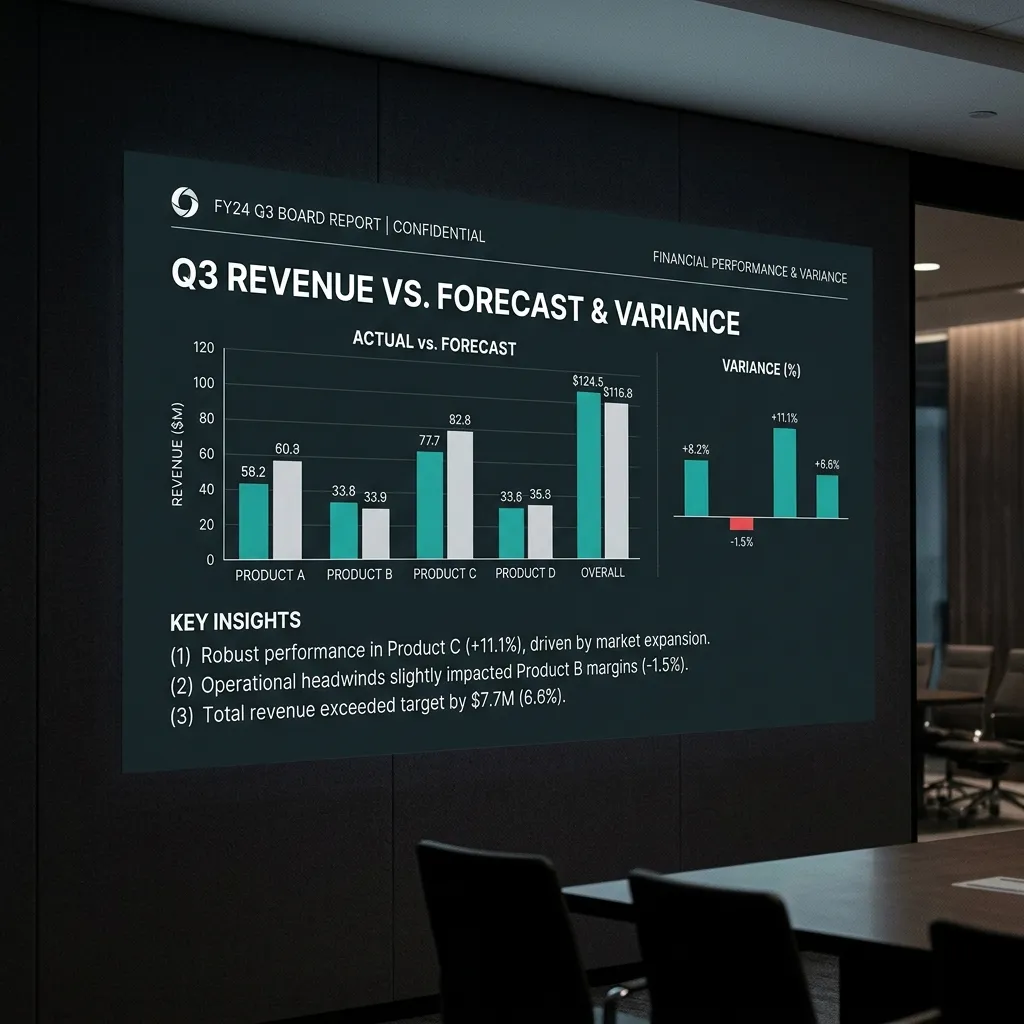
At Series B and C, forecast accuracy is no longer just a sales-management metric. It becomes evidence of operating control. Boards expect leadership to define the forecast basis, explain why the number moved, and show which controls will reduce unsupported variance next quarter.
This stage-specific page assumes you already understand the broad definition and formula. For the general benchmark table, MAPE/WMAPE definitions, and calculation method, use the canonical sales forecast accuracy benchmark guide. This page focuses on what changes once the same metric is used in board reporting and investor conversations.
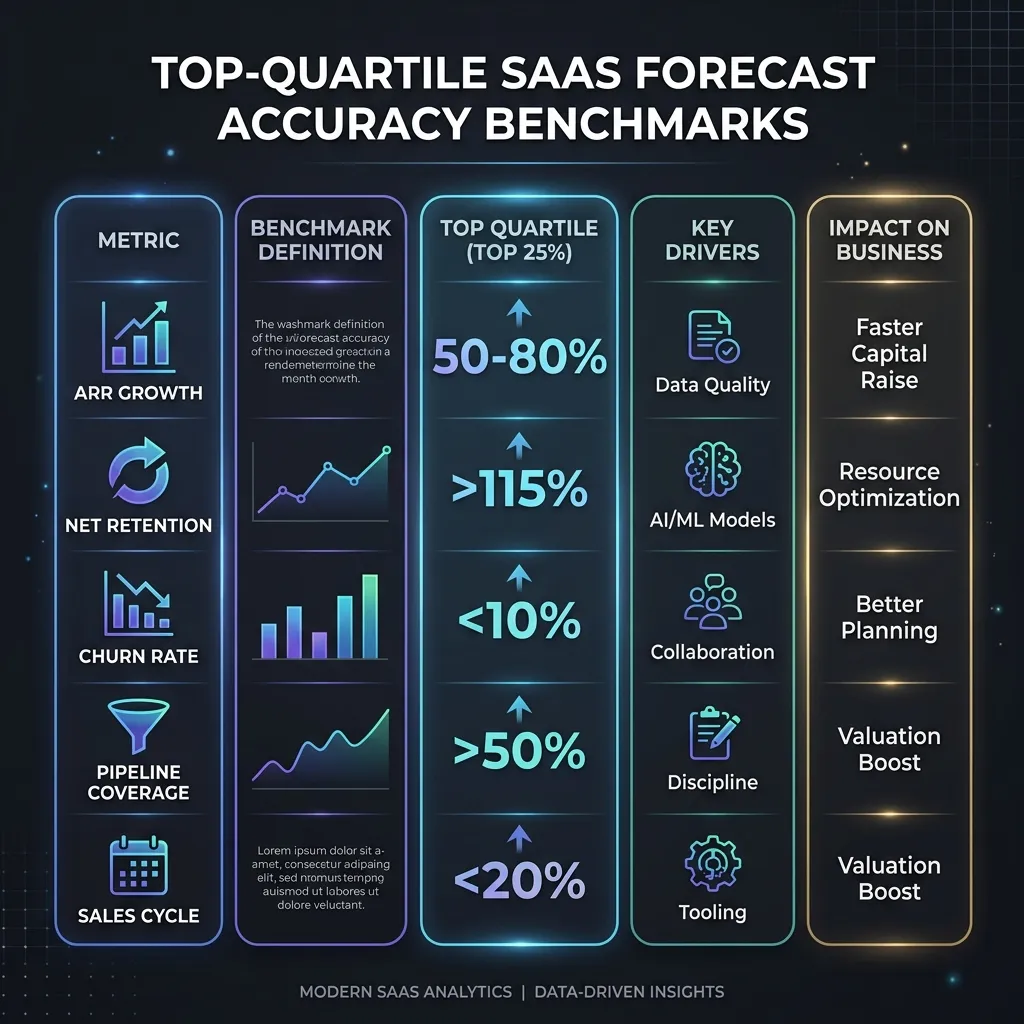
Research benchmark: public and private SaaS benchmark sources consistently treat predictable revenue as a management-quality signal, but exact forecast-accuracy thresholds vary by motion, period, and revenue basis. Series A companies typically carry wider error bands than Series B because stage discipline and process infrastructure are still being built.
- Board-ready: the forecast basis is stable, the variance bridge is explainable, and unsupported movement is reviewed before the board cycle.
- Watch list: the company can calculate accuracy but cannot consistently explain whether misses come from timing, deal quality, renewal risk, or definition drift.
- Governance risk: repeated misses are explained after the fact, definitions change by audience, and CRM, billing, and finance records do not reconcile cleanly.
Editorial note: this page treats single-digit variance as a governance target, not a universal guarantee or a claim that every Series B company should be measured against one public benchmark.
The Operating Value of Forecast Accuracy
Reducing forecast variance is not just a reporting win. It changes how leadership allocates capital, hires against pipeline, and explains the quarter to investors. The financial impact should be modeled as an illustrative case, not presented as a universal promise.
- Operating efficiency: fewer late-quarter surprises, fewer reactive hiring or spend changes, and cleaner capacity planning.
- Burn multiple protection: better timing discipline reduces the risk of hiring ahead of unsupported pipeline.
- Diligence readiness: private equity and late-stage VC reviewers can trace the number from CRM assumptions to finance records without rebuilding the story from scratch.
Free Model
What is your forecast variance actually costing you?
Run the numbers: model your quarterly revenue at risk, the cost of inaction, and how fast the fix pays back, with stage-specific benchmarks for Series A–C.
Run the ROI Model →PLG vs. Enterprise: Differentiating the Motion
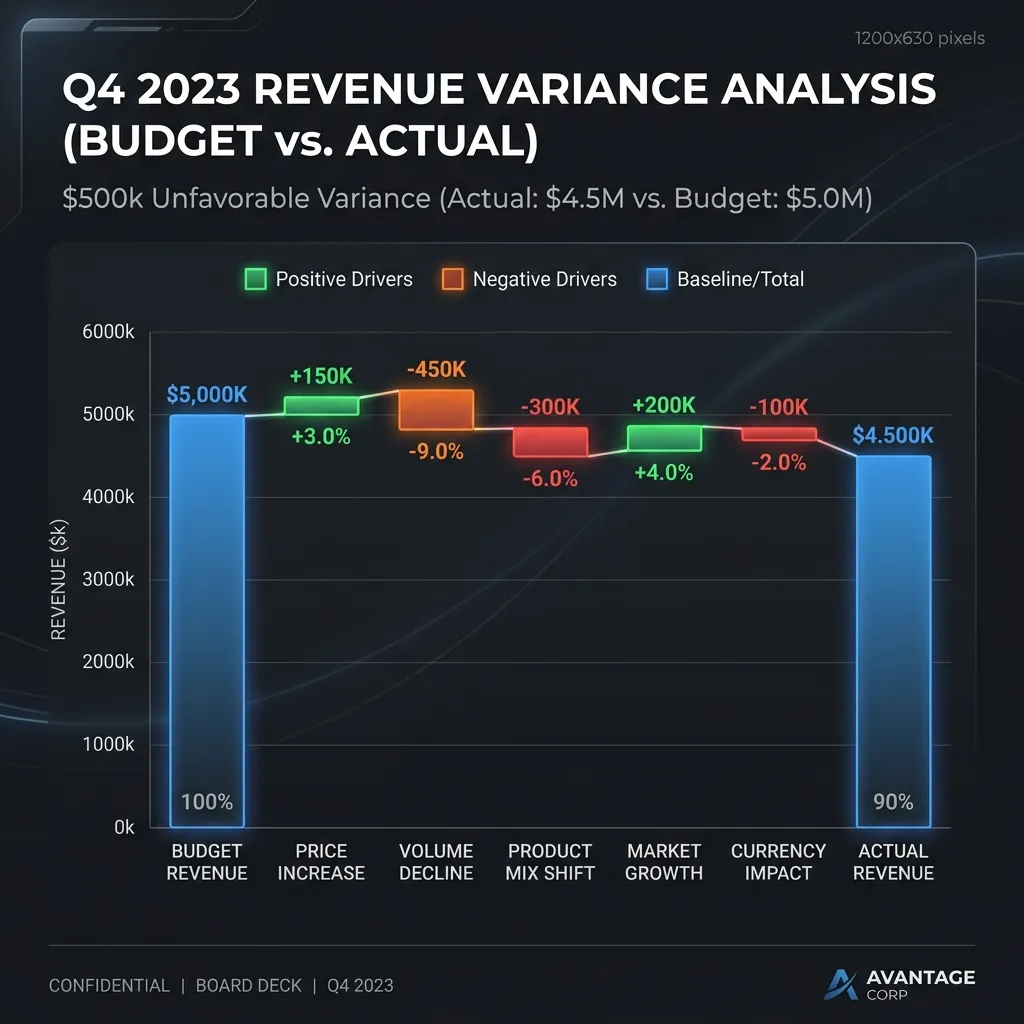
Accuracy expectations change based on the go-to-market motion. High-velocity PLG (Product-Led Growth) models rely on statistical cohort data and usage analytics. Enterprise Field Sales rely on deal-level milestone verification (e.g., MEDDIC). When presenting accuracy data in this context, the variance bridge framework helps boards understand which motion drove the miss, and why the correction path differs by segment.
In PLG motions, monthly recurring revenue forecasts can be modeled from cohort, usage, activation, and expansion patterns. Enterprise motions are lumpier; a single delayed six-figure deal can move the quarter materially. Boards still expect one company-level view, but that view should disclose the method used for each motion before presenting a blended variance number.